EEG & Neurophysiology Investigation
Clinical Neurophysiology
Some neurological conditions don’t show up in a blood test or a scan. They’re identified through the electrical signals your nervous system produces: how your brain activity patterns during a seizure risk assessment, how fast signals travel through your nerves, how your muscles respond to stimulation. Clinical neurophysiology measures all of this.
At Oasis Clinics, the neurophysiology department provides a full range of diagnostic investigations for neurological and neuromuscular conditions, from epilepsy in children to nerve damage in adults with long-term diabetes.
EEG (Electroencephalography)
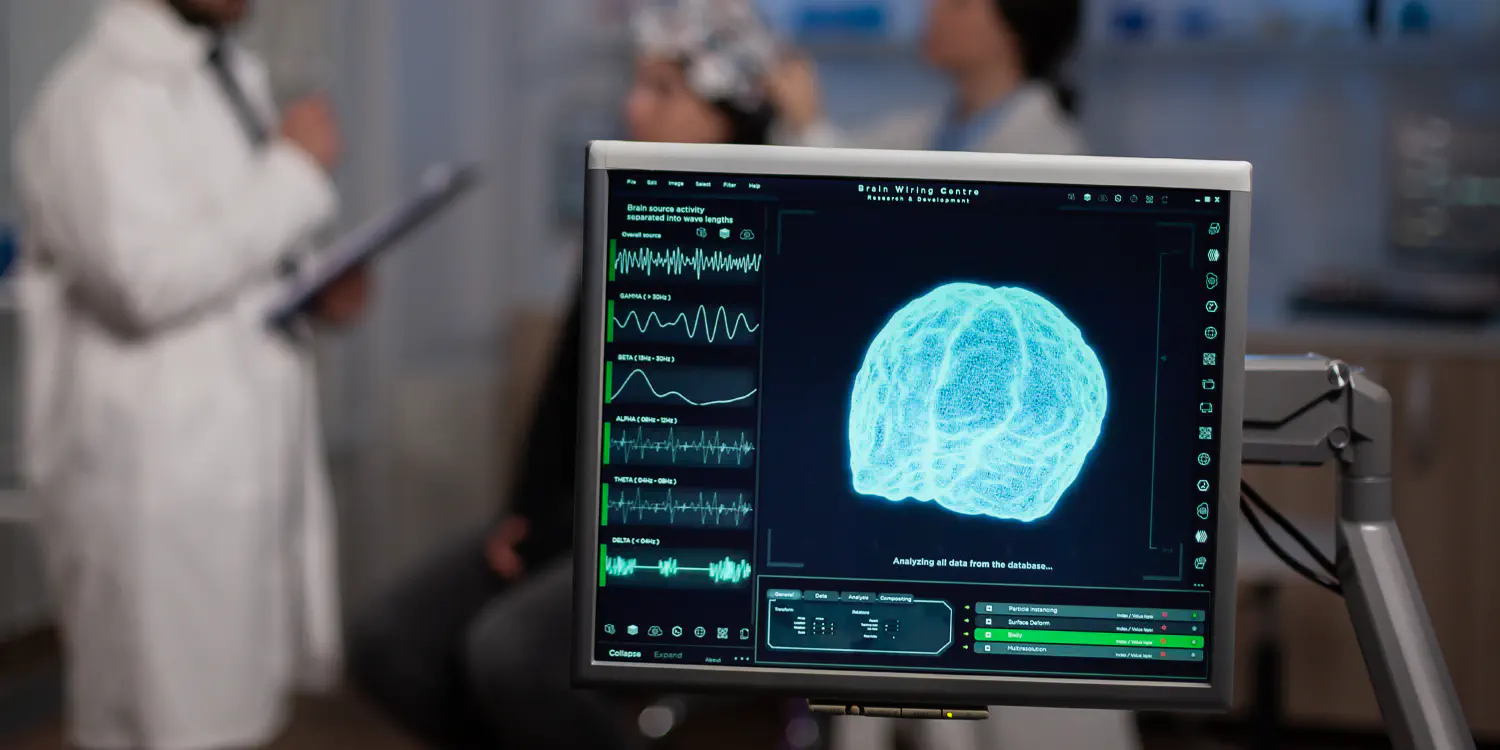
An EEG records the brain’s electrical activity through small sensors placed on the scalp. It is the primary diagnostic test for epilepsy and seizure disorders in both children and adults, and one of the most requested neurological investigations in Egypt.
You should consider an EEG if:
You or your child has had a seizure or unexplained episodes of loss of consciousness. You have a confirmed epilepsy diagnosis and need medication monitoring or adjustment. Your doctor needs to investigate unusual episodes, confusion, or sleep-related neurological symptoms.
NCS and EMG (Nerve Conduction Studies and Electromyography)
NCS measures how quickly electrical signals travel through your nerves. EMG assesses the electrical activity of muscles at rest and during contraction. Together, they identify where damage has occurred in the peripheral nervous system and how significant it is.
These are the tests your neurologist needs to diagnose and manage:
Carpal Tunnel Syndrome Tingling or numbness in the hand, often worse at night or during repetitive tasks.
Ulnar Neuropathy Numbness in the ring and little finger, commonly from sustained pressure at the elbow.
Diabetic Neuropathy Nerve damage caused by long-term high blood sugar, typically presenting as burning, tingling, or loss of sensation in the feet and legs. Given Egypt’s high rates of diabetes, this is one of the most common indications for NCS at our clinic.
Inherited Peripheral Neuropathies Genetic nerve conditions affecting sensation and movement.
Motor Neuron Disease and Myasthenia Gravis Neuromuscular conditions requiring precise electrophysiological characterization.
If you’ve been experiencing unexplained numbness, tingling, progressive weakness, or muscle wasting in the limbs, NCS and EMG provide the objective diagnostic data that replaces guesswork with a clear clinical picture.
Evoked Potentials (EP)
Evoked potentials measure how quickly the brain responds to sensory stimulation, testing the integrity of nerve pathways from a sense organ to the brain. They are used when the clinical picture suggests damage somewhere along those pathways that other tests haven’t localized.
Multiple Sclerosis EP studies detect damage in the optic, auditory, and sensory pathways, often before symptoms become severe. They are a standard component of MS diagnosis and monitoring.
Assessment of Neurological Function in Critically Ill Patients Used to evaluate brain activity in unconscious or comatose individuals.
Intraoperative Neurophysiology Monitoring Protecting brain and spinal cord function in real time during surgery on the brain or spine.