Traditional Chinese Medicine
Traditional Chinese Medicine
Traditional Chinese Medicine has been practiced for thousands of years and remains one of the most widely used systems of medicine in the world. At Oasis Clinics, it’s offered as part of an integrated clinical approach, not as a standalone alternative to conventional medicine.
For many patients, TCM works alongside their existing treatments to address the dimensions of health that standard pharmaceutical approaches don’t always reach effectively: persistent pain, chronic stress, disturbed sleep, and digestive dysfunction. The practitioners here work within a clinic where cardiology, psychiatry, internal medicine, and physiotherapy are all available. TCM doesn’t operate in isolation. It works better because it doesn’t.
What TCM Helps With
TCM at Oasis Clinics is used as a therapeutic complement for conditions recognized by the World Health Organization and supported by clinical research:
Chronic Pain Back pain, neck pain, shoulder pain, joint pain, arthritis, and fibromyalgia.
Migraines and Tension Headaches Reducing frequency and severity over time.
Stress and Anxiety Particularly the physical manifestations: muscle tension, elevated heart rate, and disrupted sleep.
Insomnia Difficulty falling asleep, staying asleep, or waking unrefreshed.
Digestive Complaints Bloating, irritable bowel syndrome, constipation, nausea, and functional gut disorders.
Fertility Support Often used alongside conventional reproductive medicine to support ovulation regularity and overall reproductive health.
Menopausal Symptoms Hot flashes, sleep disruption, and mood changes.
Post-Injury Recovery Reducing inflammation and supporting tissue healing alongside physiotherapy.
TCM does not replace diagnosis or medical management of these conditions. It works as part of a treatment plan, and it often improves outcomes in cases where medication alone has not been sufficient.
Acupuncture
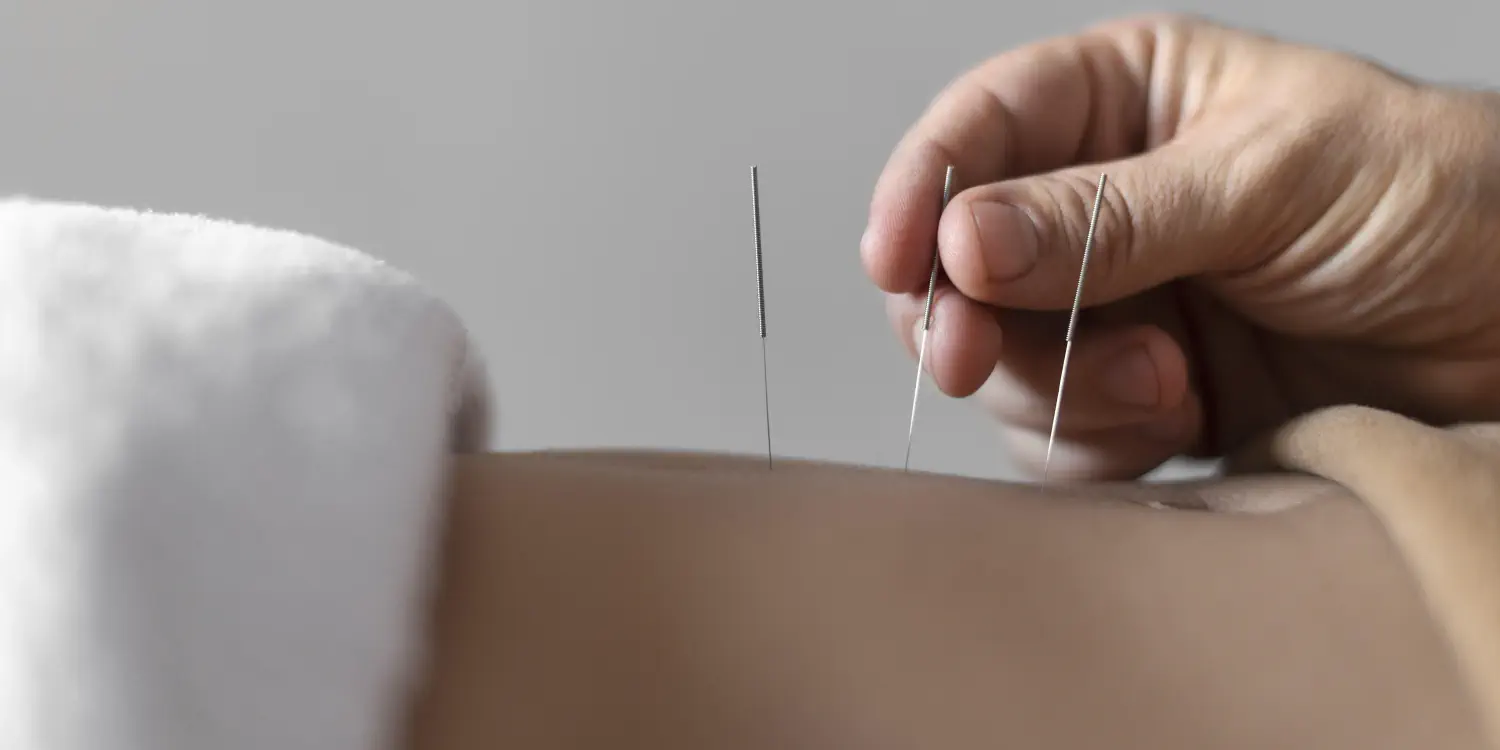
Acupuncture is the most widely practiced component of TCM and the one with the broadest clinical evidence base. It involves the insertion of fine, sterile needles at specific points on the body. The needles are thin enough that most patients feel little to no discomfort on insertion. Depending on the protocol, the practitioner may gently manipulate the needles, apply heat, or use mild electrical stimulation to deepen the therapeutic effect.
In TCM, the body contains more than 2,000 acupuncture points connected by 12 meridians, pathways through which the body’s vital energy (qi) flows. When that flow is blocked or imbalanced, health problems follow. Acupuncture works to restore that balance.
From a Western clinical perspective, acupuncture stimulates the nervous system, triggers the release of endorphins and natural pain-modulating compounds, and produces measurable effects on muscle, connective tissue, and inflammatory response.
A typical treatment plan begins with an initial assessment session, followed by a series of treatments spaced weekly or fortnightly. The number of sessions depends on the condition and the individual’s response.
Moxibustion
Moxibustion is a heat therapy that involves burning moxa (dried mugwort herb) near specific acupuncture points without direct contact with the skin. The heat penetrates deeply into the tissue, stimulating circulation and promoting the body’s natural healing response. It is typically used in combination with acupuncture, particularly for conditions associated with cold, fatigue, poor circulation, and chronic muscular pain.
Tui Na
Tui Na is a Chinese therapeutic massage that uses targeted pressure, joint mobilization, and specific movement techniques applied along the same meridian pathways as acupuncture. Unlike general relaxation massage, Tui Na is structured around precise therapeutic goals. It is particularly effective for musculoskeletal pain, restricted movement, and tension that doesn’t respond fully to standard massage or physiotherapy alone.
TCM Within the Oasis Clinics Framework
What distinguishes TCM at Oasis Clinics from a standalone acupuncture practice is the clinical infrastructure around it. If you’re receiving TCM for chronic back pain, the orthopedic and physiotherapy teams are in the same building. For stress and insomnia, the psychiatry team is available. For digestive complaints, the gastroenterology department is here.
TCM works best when the treating practitioner knows what else is being managed and can coordinate accordingly. Here, that coordination is built into how the clinic operates.